How Is Global Carbon Cycling Affected by Fires?
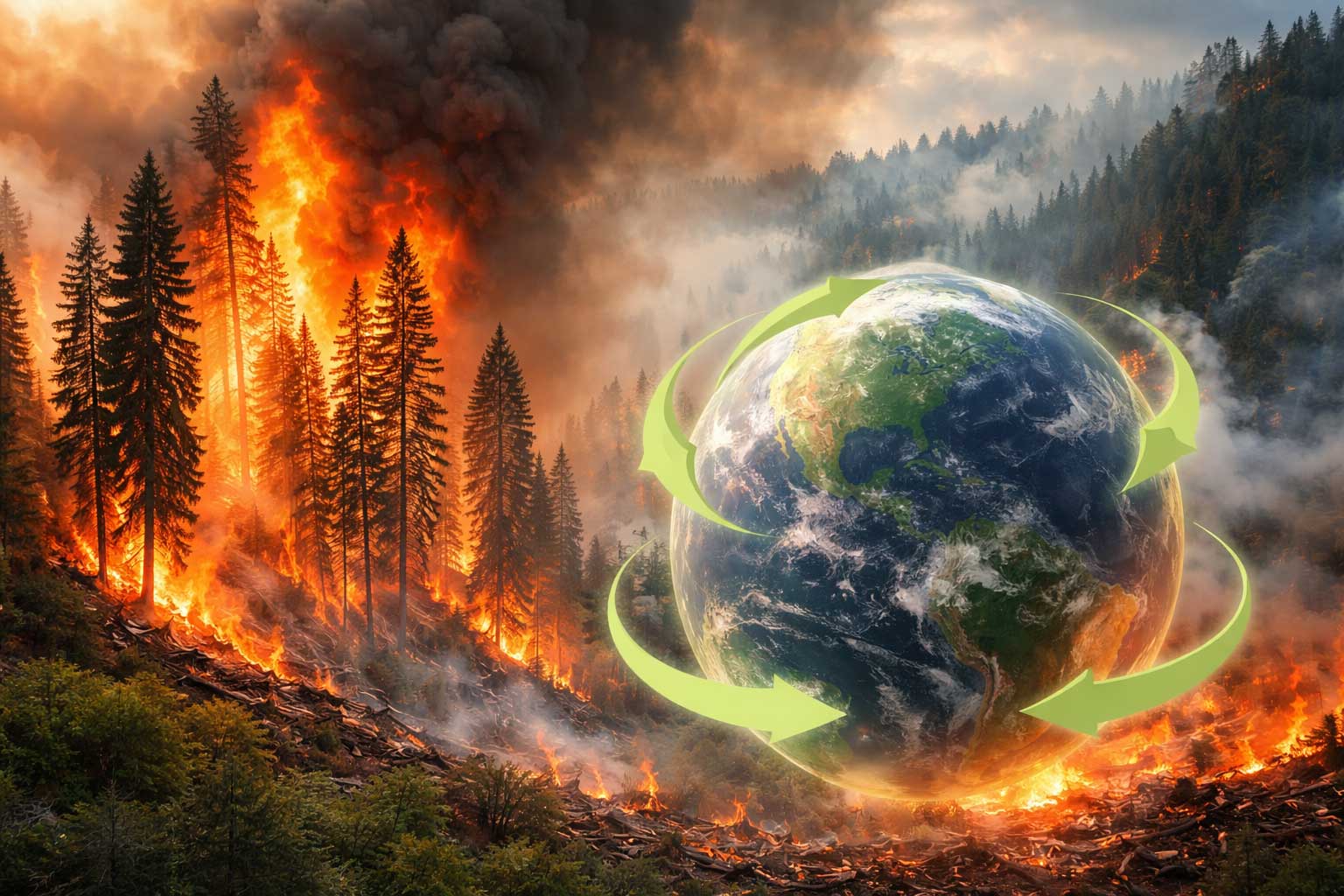
Fires affect the global carbon cycle by releasing stored carbon into the atmosphere, weakening the ability of forests and soils to absorb future carbon dioxide, and in some cases unlocking ancient carbon that has been stored for centuries or even millennia. Recent research shows this effect is becoming more serious as fires intensify in carbon-dense forests, peatlands, and high-latitude ecosystems. During the March 2024 to February 2025 fire season, global fire-related carbon emissions reached 2.2 petagrams of carbon, about 9% above average, even though burned area was below average. Scientists say that pattern reflects a shift toward more damaging fires in carbon-rich landscapes rather than a simple increase in total area burned.
This matters because the global carbon cycle depends on a balance between sources and sinks. Forests, wetlands, and soils normally remove large amounts of carbon dioxide from the atmosphere, but fires can disrupt that balance in two ways at once: they release carbon immediately through combustion and they reduce future carbon uptake by damaging vegetation and soil systems. NASA notes that carbon emissions from forest fires increased 60% globally between 2001 and 2023, with boreal forest fire emissions in Eurasia and North America nearly tripling over that period.
Fires Release Carbon Directly Into the Atmosphere
The most immediate effect of fire on carbon cycling is combustion. When vegetation burns, carbon stored in leaves, wood, roots, and surface litter is released as carbon dioxide and other gases. In severe fires, part of that carbon pulse can be enormous, especially when large forests or wetlands are involved. The European Space Agency said more than 8 billion tonnes of CO2 entered the atmosphere during the 2024–2025 fire season, driven largely by severe fires in carbon-rich forests and wetlands across the Americas.
Fires Weaken Future Carbon Absorption
Fire does not only release carbon in the moment. It also reduces future carbon removal by damaging the living systems that normally absorb CO2 through photosynthesis. When tree canopies, young saplings, and root systems are destroyed, the affected ecosystem may take years or decades to recover its previous carbon uptake capacity. This is one reason fires can shift a region from acting as a carbon sink to acting as a carbon source.
Peatland and Boreal Fires Are Especially Disruptive
Some fires are much more important to the carbon cycle than others. Grassland fires can be extensive, but fires in peatlands and boreal forests are often more damaging in carbon terms because they burn through carbon-dense material that took centuries to accumulate. A 2025 study found large carbon losses from burned permafrost peatlands, showing that wildfire can strongly reduce long-term carbon storage in these systems. Another 2026 report said northern boreal wildfires may be more climatically damaging than previously thought because they can burn deep into carbon-rich soil layers, not just trees at the surface.
Fire Can Unlock Older Carbon Stores
In some landscapes, fire reaches belowground carbon stores that are normally protected from rapid release. That is especially important in peatlands and permafrost regions, where carbon has built up over hundreds or thousands of years. When severe fire burns through insulating vegetation and organic soil layers, it can expose deeper material to decay, erosion, and further combustion. That means fire can accelerate the transfer of long-stored carbon into the atmosphere and make future emissions more likely.
Climate Change and Fire Create a Reinforcing Loop
The relationship runs both ways. Climate change is increasing the likelihood of extreme fire weather in forested regions, and those fires then release more greenhouse gases that contribute to further warming. A 2025 Nature study found that human-caused climate change has raised the odds of extreme climate-driven fire years across global forested lands, with particularly strong increases in temperate and Amazonian forests. This creates a feedback loop: hotter and drier conditions make severe fires more likely, and severe fires add more carbon to the atmosphere.
Why This Changes the Global Carbon Picture
The key shift is that fire is increasingly affecting ecosystems with very large carbon stocks. The 2024–2025 State of Wildfires report found above-average fire carbon emissions despite below-average burned area, largely because extreme fire seasons in South America’s rainforests, dry forests, wetlands, and Canada’s boreal forests pushed totals higher. In simple terms, less land can burn overall while more carbon is still released if the fires move into richer carbon reservoirs.
The Bottom Line
So, how is global carbon cycling affected by fires? Fires inject carbon into the atmosphere, reduce the ability of ecosystems to reabsorb that carbon, damage soils that store carbon, and in some regions release very old carbon from peat and permafrost systems. The result is a carbon cycle that becomes less stable and more tilted toward atmospheric buildup, especially when severe fires hit forests, wetlands, and northern peat-rich landscapes.