
How Is Carbon a Part of the Hydrosphere?
Carbon is one of the most important elements on Earth, and it does not only exist in rocks, soil, and the atmosphere. A large portion of carbon is also stored and constantly moving through the hydrosphere.
This article explains how carbon becomes part of the hydrosphere, where it is found in water systems, and why the oceans play a central role in regulating Earth’s climate and carbon balance.
Definition
The hydrosphere refers to all water on Earth, including oceans, rivers, lakes, glaciers, groundwater, and even water vapor in the atmosphere. Carbon becomes part of the hydrosphere when it dissolves into water or is transported through aquatic ecosystems in chemical and biological forms.
Carbon in the hydrosphere is not a single substance. It exists as dissolved gases, organic matter, and mineral-based compounds. These forms interact continuously with the atmosphere, biosphere, and lithosphere as part of the global carbon cycle.
How Carbon Enters the Hydrosphere
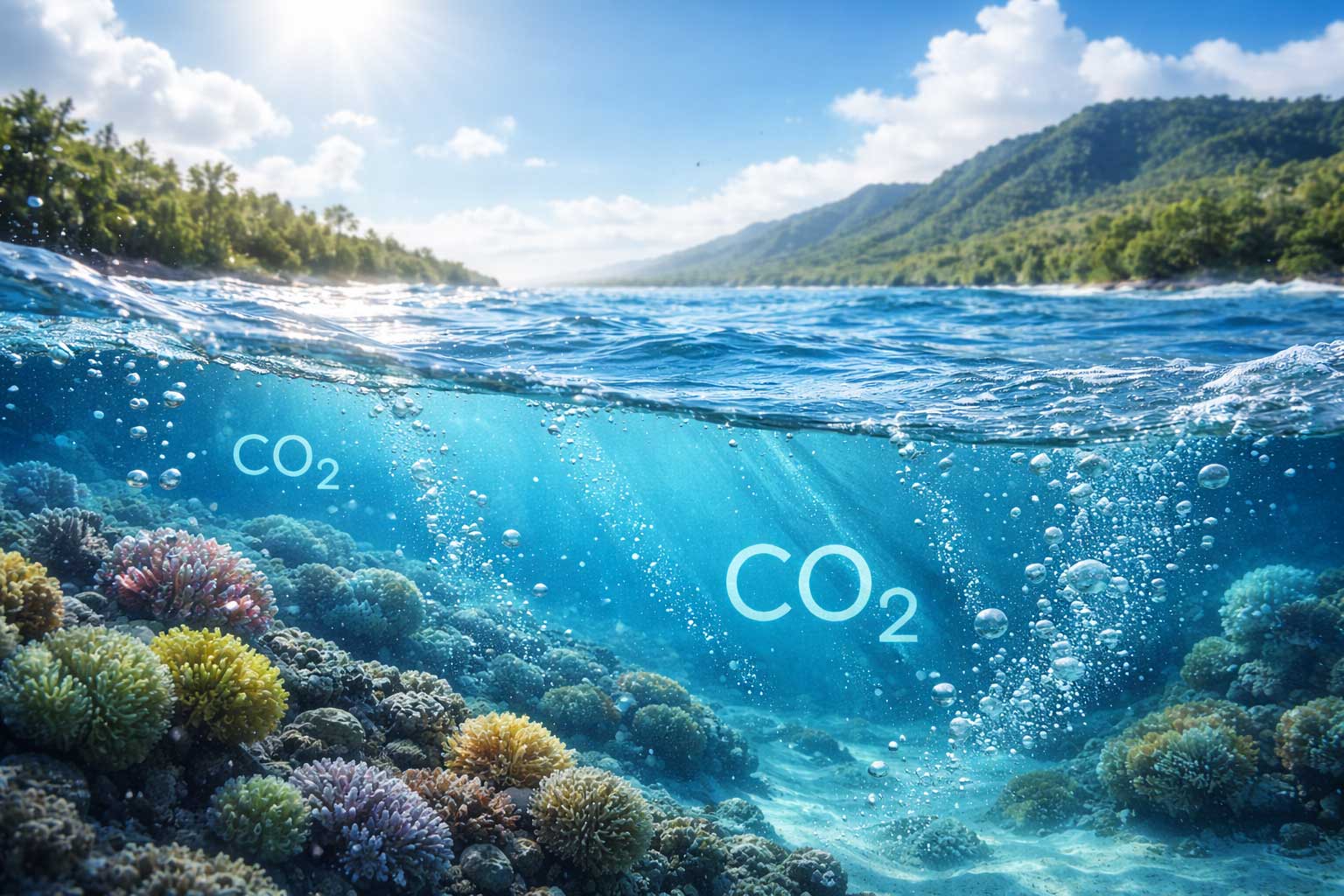
Carbon enters the hydrosphere through multiple natural processes. The most significant pathway is the absorption of carbon dioxide (CO2) from the atmosphere into ocean and freshwater systems.
Other important pathways include weathering of rocks, decomposition of organisms, and runoff from land into rivers and seas. These processes transport carbon in both dissolved and particulate forms.
Dissolved Carbon Dioxide in Water
When carbon dioxide enters water, it does not remain as free gas for long. It reacts chemically with water molecules and forms carbonic acid:
CO2 + H2O → H2CO3
Carbonic acid is weak but extremely important because it drives further reactions that produce carbonate and bicarbonate ions. These ions form the foundation of carbon chemistry in the oceans.
Bicarbonate and Carbonate Ions
Most carbon in seawater exists in the form of dissolved bicarbonate (HCO3−) and carbonate (CO3²−) ions rather than CO2 gas. These ions are stable and allow the ocean to store vast amounts of carbon over long periods.
This storage system is one reason the ocean is considered Earth’s largest active carbon reservoir. The hydrosphere can hold far more carbon than the atmosphere.
Carbon in Ocean Life (Biological Carbon)
Carbon is also part of the hydrosphere because marine organisms use it for survival. Phytoplankton absorb dissolved CO2 during photosynthesis and convert it into organic carbon compounds.
This organic carbon moves through the marine food chain as fish, zooplankton, and other organisms consume one another. When organisms die, carbon-rich material sinks deeper into the ocean.
The Ocean Carbon Pump
One of the most important carbon processes in the hydrosphere is the biological carbon pump. This refers to the movement of carbon from surface waters to deep ocean layers through living organisms and sinking organic debris.
When carbon sinks to deep ocean zones, it can remain stored for hundreds or even thousands of years. This long-term storage reduces atmospheric carbon dioxide levels and helps stabilize global temperatures.
Carbon in Shells and Coral Reefs
Many marine organisms, such as corals, clams, and planktonic species, build shells and skeletons from calcium carbonate (CaCO3). Calcium carbonate is produced using carbonate ions dissolved in seawater.
When these organisms die, their shells can settle on the ocean floor, eventually forming limestone deposits. This process connects the hydrosphere to the lithosphere through long-term carbon storage.
Carbon in Freshwater Systems
Carbon is also present in rivers, lakes, and groundwater. Freshwater carbon comes from:
- Atmospheric CO2 dissolving into water
- Organic matter from plants and soil runoff
- Decomposition of organisms in water
- Carbonate minerals dissolving into groundwater
Although freshwater systems contain less total carbon than oceans, they play a major role in transporting carbon from land into the sea.
Carbon in Groundwater
Groundwater contains dissolved carbon mainly as bicarbonate ions. This carbon originates from carbon dioxide produced by soil microbes and plant roots. As rainwater moves underground, it carries CO2 and reacts with rocks such as limestone.
This reaction creates carbon-rich groundwater, which can eventually return to rivers and oceans through springs and underground flow.
Why Carbon in the Hydrosphere Matters
Carbon stored in the hydrosphere plays a critical role in regulating Earth’s climate. The ocean absorbs large amounts of atmospheric carbon dioxide, reducing greenhouse gas buildup.
However, increasing carbon absorption also contributes to ocean acidification, which can harm marine ecosystems. This makes carbon dynamics in the hydrosphere one of the most important topics in climate science.
Ocean Acidification and Carbon Chemistry
When more CO2 dissolves in seawater, it increases carbonic acid formation. This lowers pH and reduces carbonate ion availability. Less carbonate means marine organisms struggle to form shells and coral structures.
This is one of the major environmental consequences of rising global carbon emissions and highlights how closely the hydrosphere and atmosphere are linked.
Carbon Cycle Connection Between Spheres
Carbon in the hydrosphere is constantly exchanged with other Earth systems:
- Atmosphere: CO2 dissolves into oceans and can be released back into the air
- Biosphere: Marine plants and animals convert dissolved carbon into organic matter
- Lithosphere: Carbonate sediments form limestone and long-term carbon storage
This interaction is what makes carbon one of the most mobile and influential elements on Earth.
Future Outlook
As climate change continues, carbon behavior in the hydrosphere will become even more important. Scientists are monitoring how much carbon oceans can absorb, how quickly acidification progresses, and whether marine ecosystems can adapt.
Understanding carbon in the hydrosphere is essential for predicting long-term climate stability, protecting marine life, and managing global environmental change.
Frequently Asked Questions
What form of carbon is most common in the hydrosphere?
The most common form is dissolved bicarbonate (HCO3−), followed by carbonate ions (CO3²−) and dissolved CO2.
How does carbon dioxide enter the ocean?
Carbon dioxide enters the ocean mainly through diffusion from the atmosphere, where CO2 dissolves into surface waters.
Why do oceans store so much carbon?
Oceans store carbon because CO2 reacts with water to form stable bicarbonate and carbonate ions, allowing long-term storage in seawater.
Does carbon in water affect marine life?
Yes. Carbon is essential for photosynthesis and shell formation, but excess dissolved CO2 can cause ocean acidification, harming coral reefs and shellfish.
How does the hydrosphere connect to the carbon cycle?
The hydrosphere acts as a major carbon reservoir, exchanging carbon with the atmosphere, biosphere, and lithosphere through chemical and biological processes.