
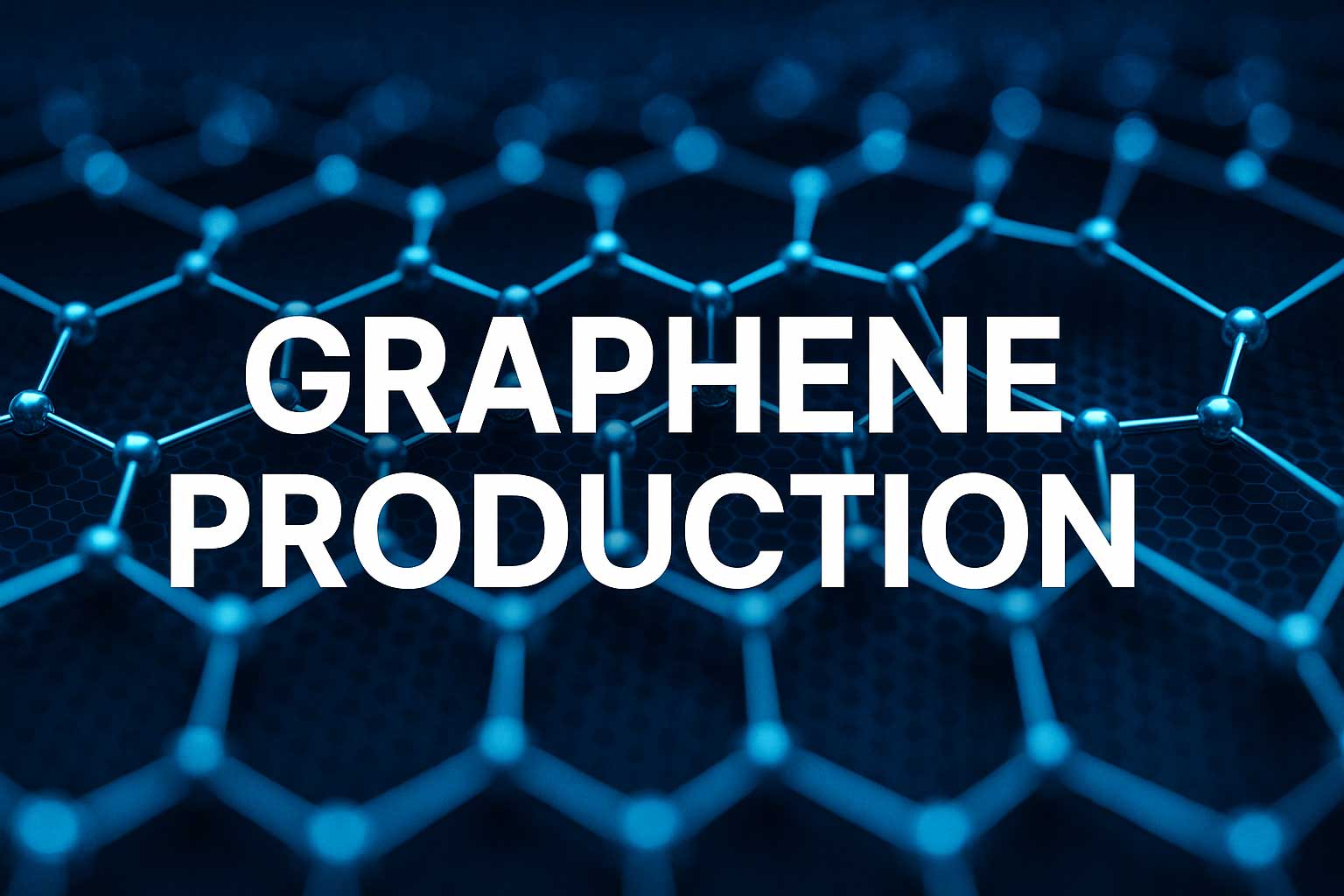
Graphene Production: Methods, Companies, and Costs
Graphene production is advancing rapidly as new methods make this revolutionary material more affordable and scalable. From lab-based exfoliation to industrial manufacturing, graphene is now entering mainstream markets.
In this guide, we explore how graphene is made, the leading graphene production companies, and the global cost trends driving large-scale graphene battery production.
What Is Graphene Production?
Graphene production is the process of creating single-atom-thick sheets of carbon with exceptional electrical, thermal, and mechanical properties. These sheets, known as graphene, are produced using various chemical, physical, and electrochemical techniques.
Since its discovery in 2004, researchers and manufacturers have refined graphene production methods to achieve higher quality and larger scale output. Today, graphene is used in batteries, coatings, electronics, and advanced materials industries worldwide.
Top Graphene Production Methods
Different graphene production methods exist to suit specific applications — from laboratory-grade graphene for electronics to industrial-grade graphene for composites and coatings.
1) Mechanical Exfoliation
This classic method, often called the "Scotch tape technique," involves peeling graphene layers from graphite crystals. While it produces the purest graphene, it is time-consuming and unsuitable for mass production.
2) Chemical Vapor Deposition (CVD)
CVD is the leading graphene manufacturing process for large-scale applications. In this technique, hydrocarbon gases such as methane are decomposed at high temperatures on metal substrates like copper, forming thin graphene films. It's ideal for electronics, sensors, and coatings.
3) Liquid Phase Exfoliation
This scalable method uses solvents and ultrasonic energy to separate graphene sheets from graphite powder. It's efficient, cost-effective, and widely used by graphene production companies for making graphene inks, paints, and composites.
4) Reduction of Graphene Oxide (rGO)
Graphene oxide is chemically reduced to form conductive graphene sheets. Although rGO is less pure than pristine graphene, it offers the best balance between cost and performance for industrial use, including graphene battery production.
5) Epitaxial Growth on Silicon Carbide (SiC)
This high-end method involves heating SiC wafers until silicon atoms evaporate, leaving a graphene layer behind. It produces excellent-quality graphene for electronics but at a high production cost.
Leading Graphene Production Companies
The race for scalable graphene production has led to a growing number of innovative companies around the world. Some of the most active graphene production companies include:
- Directa Plus (Italy): Specializes in large-scale production of graphene nanoplatelets for industrial use.
- Graphenea (Spain): Known for high-purity graphene materials for research and electronics.
- First Graphene Ltd. (Australia): Focused on eco-friendly bulk graphene production using renewable carbon sources.
- Haydale Graphene Industries (UK): Manufactures functionalized graphene materials for composites and coatings.
- Global Graphene Group (USA): Works on graphene battery production and energy storage innovations.
Graphene Production Cost and Scalability
When graphene was first discovered, the graphene production cost reached several thousand dollars per gram. Today, with advancements in CVD and chemical exfoliation, costs have fallen dramatically — bulk graphene can now be produced for under $100 per kilogram.
Lowering production cost remains a major focus for graphene production companies. Automation, renewable carbon sources, and energy-efficient techniques are reducing both cost and environmental impact, paving the way for mass adoption across industries.
Graphene Battery Production
One of the fastest-growing commercial uses of graphene is in energy storage. Graphene battery production combines advanced anode and cathode materials with graphene additives to enhance performance. These batteries charge faster, last longer, and operate safely at higher temperatures.
Companies worldwide are investing heavily in graphene battery production for electric vehicles, smartphones, and renewable energy grids — fueling massive market growth in the coming decade.
Future of Large-Scale Graphene Production
As large-scale graphene production becomes more efficient, global supply chains are shifting toward sustainability and mass affordability. Nations like China, South Korea, and the United States are leading investments in automated graphene manufacturing plants.
The global graphene industry is projected to surpass USD 2.5 billion by 2030, with continuous innovation in production efficiency and integration across graphene applications like coatings, sensors, and batteries.
Summary
Graphene production has evolved from a scientific experiment to a billion-dollar global industry. With scalable graphene production methods, declining costs, and strong investment in graphene production companies, the world is entering a new era of carbon-based technology — where graphene drives the future of batteries, electronics, and sustainable innovation.
FAQ
What are the main methods of graphene production?
Answer: The most common methods include chemical vapor deposition (CVD), liquid phase exfoliation, mechanical exfoliation, reduction of graphene oxide, and epitaxial growth on SiC.
Who are the top graphene production companies?
Answer: Major producers include Directa Plus, Graphenea, First Graphene Ltd., Haydale Graphene Industries, and Global Graphene Group.
What is the current graphene production cost?
Answer: The graphene production cost has dropped significantly — high-quality graphene now costs under $100 per kilogram for bulk industrial applications.
What is graphene battery production?
Answer: It refers to the manufacturing of energy storage systems using graphene-enhanced electrodes, which provide faster charging and longer battery life.
How is large-scale graphene production achieved?
Answer: Large-scale graphene production relies on advanced CVD systems, electrochemical exfoliation, and sustainable carbon feedstocks to achieve mass output efficiently.