The Graphene Commercial Inflection Point (Lab to Fab Era)
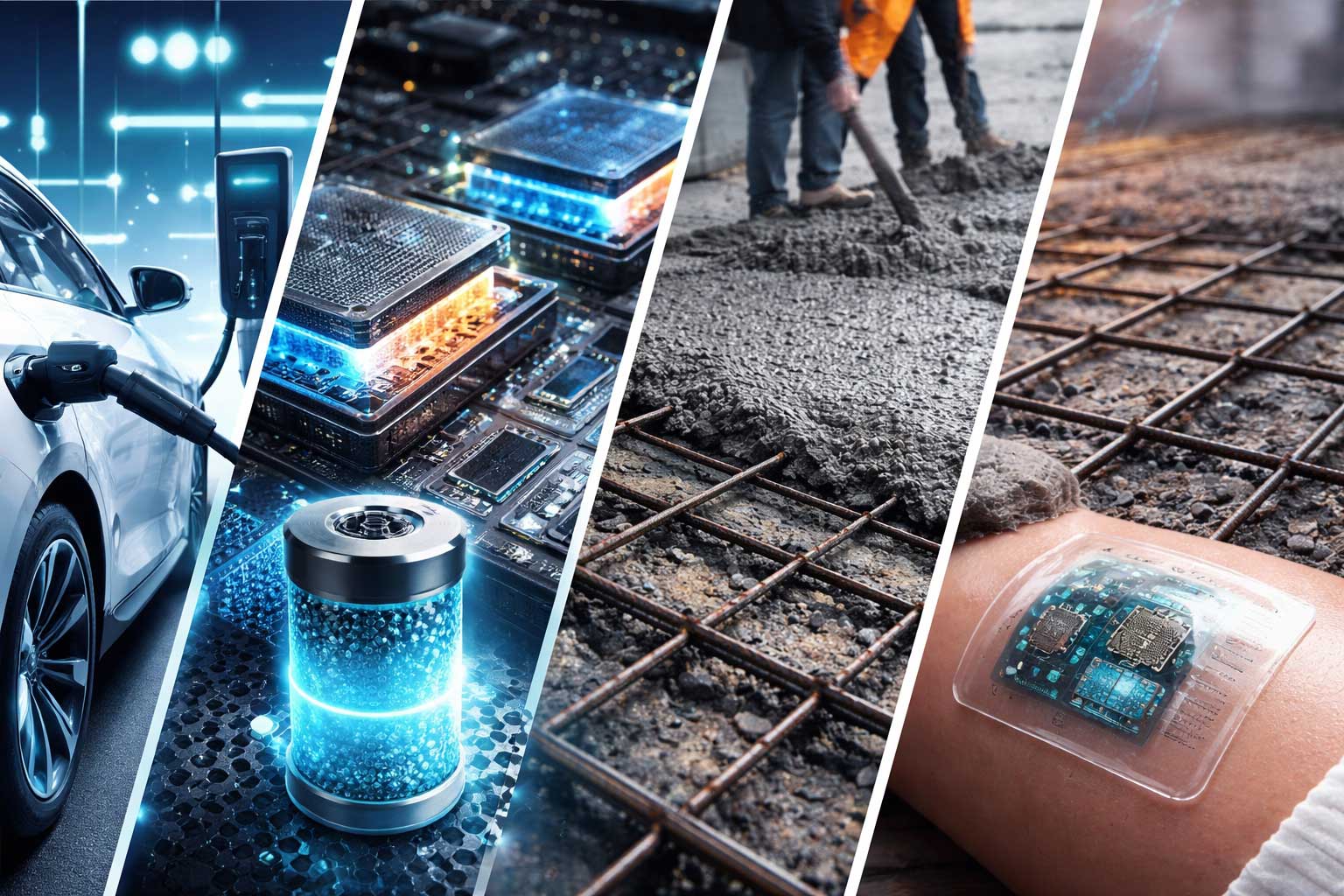
After more than two decades of research, graphene has entered its commercial inflection point. In 2026, the global graphene market is valued at approximately $1.96 billion, expanding at an annual growth rate exceeding 20%. What was once considered a laboratory breakthrough material is now being integrated into electric vehicles, AI infrastructure, construction systems, and next-generation medical technologies.
This shift represents what industry analysts are calling the “Lab to Fab Era” — the transition from experimental validation to industrial-scale manufacturing and deployment.
From Discovery to Deployment
Graphene’s extraordinary properties — exceptional thermal conductivity, high electrical conductivity, mechanical strength, and atomic-scale thinness — have been known since its isolation in 2004. However, cost, scalability, and manufacturing consistency delayed broad adoption.
In 2026, those barriers have begun to fall. Improvements in production methods and supply chain scaling have made graphene viable for industrial integration, particularly in sectors experiencing rapid technological acceleration.
The 6-Minute EV Charging Breakthrough
One of the most commercially significant developments is in electric vehicle battery technology. Graphene-enhanced battery systems are moving beyond prototype demonstrations into scaled production, targeting ultra-fast charging times under 10 minutes.
These systems aim to:
- Improve ion transport efficiency
- Increase charge acceptance rates
- Enhance thermal stability
- Extend battery lifecycle durability
For the U.S. EV market, where charging time remains a major adoption barrier, graphene integration could materially shift consumer expectations and infrastructure planning.
Cooling the AI Compute Boom
The rise of artificial intelligence has triggered unprecedented growth in data center construction. Advanced AI processors generate intense thermal loads, driving up cooling costs and energy consumption.
Graphene’s thermal conductivity — significantly higher than traditional copper-based materials — is now being incorporated into thermal interface materials (TIMs) and heat dissipation systems.
Industrial benefits include:
- Improved heat transfer performance
- Reduced energy demand for cooling
- Increased processor stability
- Longer hardware lifespan
For hyperscale operators, even marginal efficiency gains translate into millions of dollars in annual savings.
Graphene-Enhanced Smart Concrete
Infrastructure development is another area where graphene is transitioning from theory to application. Graphene-enhanced concrete formulations are being deployed in pilot projects across North America and Europe.
Key advantages include:
- Improved compressive strength
- Greater crack resistance
- Reduced corrosion vulnerability
- Lower overall material requirements
Some formulations report material reductions approaching 30% while maintaining structural integrity — a significant development in sustainable construction and carbon reduction strategies.
Biochips and Precision Medical Monitoring
In healthcare, graphene’s conductivity and sensitivity enable highly responsive biosensors. Early-stage graphene-based biochips are demonstrating real-time physiological monitoring capabilities.
Potential applications include:
- Continuous glucose monitoring
- Cardiac rhythm tracking
- Biochemical detection systems
- Wearable diagnostic platforms
While large-scale clinical deployment is still progressing, 2026 marks the first phase of industrial translation from research prototypes to commercial health technologies.
The Economic Inflection Point
The transition into the Lab to Fab Era signals more than technological validation. It reflects market alignment:
- EV adoption accelerating nationwide
- AI infrastructure expanding at record pace
- Climate-driven infrastructure upgrades
- Increased demand for advanced medical monitoring
The convergence of these forces has created a rare materials opportunity. Graphene is no longer positioned as a future promise — it is an enabling layer within multiple high-growth industries.
Looking Ahead
The $1.96 billion valuation in 2026 may represent the early stage of a much larger expansion cycle. As manufacturing efficiencies improve and integration costs decline further, graphene’s presence is expected to deepen across energy storage, semiconductor packaging, aerospace components, and smart infrastructure.
The Lab to Fab Era defines a structural shift. Graphene has moved beyond academic fascination and into commercial execution — marking a pivotal chapter in advanced materials history.
Frequently Asked Questions
What does “Lab to Fab Era” mean?
It refers to graphene’s transition from laboratory research and experimental validation into scalable industrial manufacturing and real-world commercial deployment.
How large is the graphene market in 2026?
The global graphene market is valued at approximately $1.96 billion, with strong double-digit annual growth.
Why is graphene important for AI infrastructure?
Graphene improves heat dissipation in advanced processors, helping reduce cooling costs and maintain performance stability in high-density data centers.
Are graphene batteries available commercially?
Several developers have moved beyond prototype stages into scaled manufacturing, though widespread EV platform integration is still expanding.