The Best Graphene-Enhanced Trainers 2026: Durability, Grip & Real-World Picks
Graphene-enhanced trainers are built for athletes who want shoes that last longer, grip harder, and stay responsive across more miles and workouts.
In 2026, the most proven use of graphene in footwear is still in outsoles and cushioning systems—helping brands tune the usual trade-off between sticky grip and fast wear.
This updated guide explains what “graphene-enhanced” really means, where it delivers measurable value (trail running, CrossFit, high-wear training),
and which models are consistently associated with graphene outsole and foam technology—plus practical buying advice so you don’t fall for marketing noise.
Definition: What Are Graphene-Enhanced Trainers?
Graphene-enhanced trainers are athletic shoes that incorporate graphene (a carbon-based nanomaterial) into performance-critical shoe components—most commonly the outsole rubber,
and sometimes the midsole foam. Unlike “graphene clothing” or “graphene accessories,” footwear has a clear mechanical target: grip, abrasion resistance, and long-term consistency.
In simple terms, graphene is added in small amounts to help a rubber compound or foam compound behave better under stress. In outsoles, it aims to increase wear resistance
without making the rubber feel like hard plastic. In midsoles, it aims to improve resilience so the cushioning stays springy for longer.
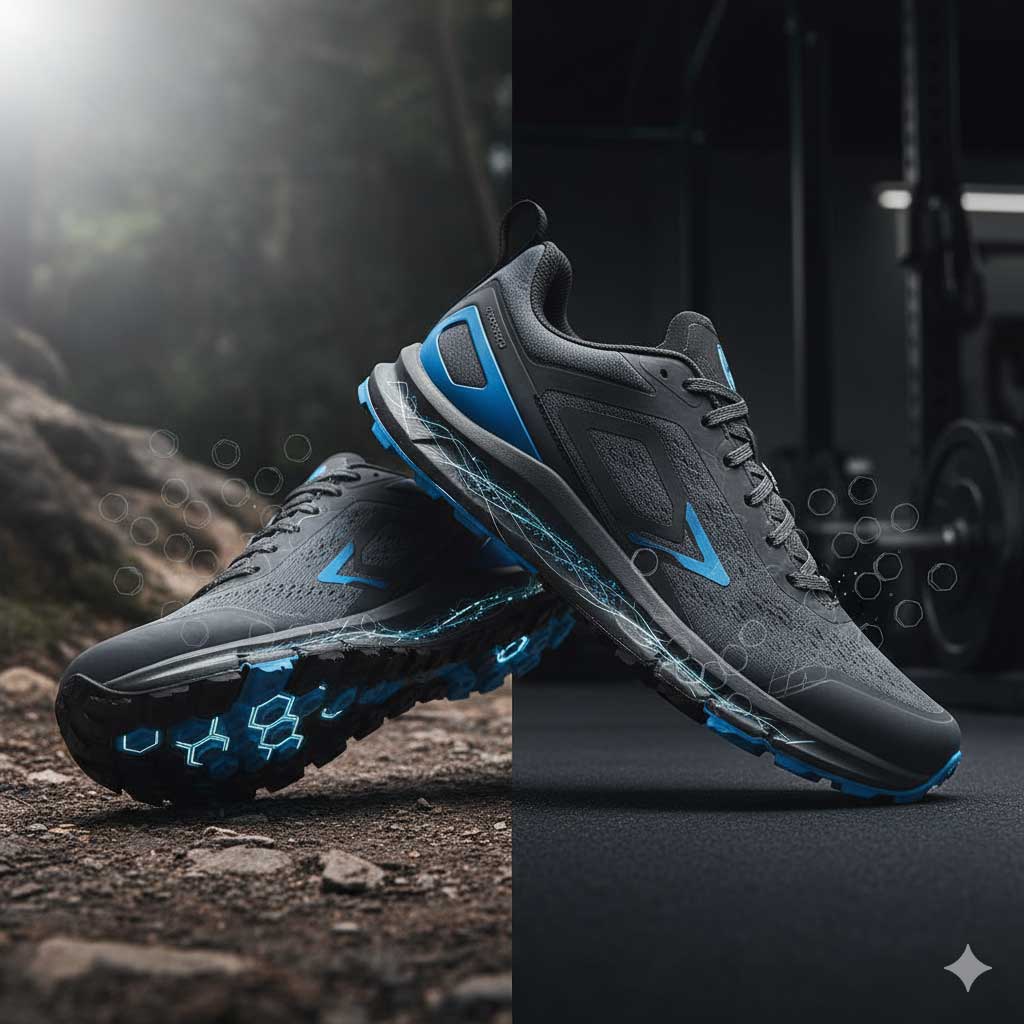
In 2026, the strongest and most widely recognized graphene integration is still associated with trail-running and gym training footwear, where outsoles are punished by sharp rocks,
wet surfaces, rope climbs, sled pushes, and high-friction indoor floors.
Composition & Structure: Where Graphene Is Used in Shoes
1) Outsole Rubber (Graphene-Infused Grip Compounds)
The outsole is the most important area for graphene integration because it directly affects traction and durability. A graphene-infused outsole typically aims to:
- Increase abrasion resistance (slower wear over time)
- Maintain traction across wet rock, mud, gravel, and gym floors
- Improve compound stability so grip and feel remain consistent across months of use
2) Midsole Foam (Graphene-Enhanced Cushioning)
Some shoes add graphene to midsole foam to improve long-term responsiveness. The goal is not “more bounce forever,” but a slower decline in feel
compared to conventional EVA-based foams. This can matter most for long-distance runners and athletes who keep shoes longer than the typical replacement cycle.
3) Reinforcement Areas (High-Wear Training Zones)
In functional fitness, the shoe is often destroyed at the edges: toe drags, rope climbs, lateral shuffles, and abrasive contact points.
Graphene-related outsole designs sometimes extend rubber coverage around the toe and sides to defend high-wear zones.
Key Properties: What Graphene Changes in Training Footwear
Grip vs. Durability (The Usual Trade-Off)
Traditional outsole design forces a compromise:
soft rubber grips better but wears faster; hard rubber lasts longer but feels slippery on wet rock or smooth floors.
Graphene-enhanced compounds are positioned as a way to shift that curve—aiming for a rubber that grips like a softer compound but lasts closer to a harder compound.
Consistency Over Time
Many trainers feel great for the first few weeks and then fade—traction smooths out, foam compresses, and the shoe loses confidence.
Graphene claims in footwear are mostly about slowing that decline, not performing miracles on day one.
Energy Return (Foam Resilience)
“Energy return” is a popular phrase, but what athletes actually feel is whether the shoe stays responsive.
In graphene-enhanced foams, the focus is typically on resilience and reduced compressive wear so the shoe remains lively deeper into its lifespan.
Production & Processing Methods: Why Not All “Graphene Shoes” Perform the Same
Graphene is not a single standardized ingredient in consumer products. Footwear brands can use different graphene forms (such as graphene nanoplatelets or related carbon nanomaterials),
and the final performance depends on mixing quality, dispersion, and compound design.
In manufacturing terms, the challenge is to distribute graphene evenly through rubber or foam without clumping. If the dispersion is inconsistent, the outsole can wear unevenly,
and the “graphene advantage” becomes harder to detect. For buyers, this is why reputable brand testing, real-world reviews, and transparent tech descriptions matter.
The most trustworthy signs of a real graphene integration are:
- Clear explanation of where graphene is used (outsole, foam, reinforcement)
- Consistency across multiple models and generations
- Long-term review feedback that mentions slower wear and durable traction
Best Graphene-Enhanced Trainers in 2026
The “best” trainer depends on your sport, foot shape, and whether you prioritize trail grip, road efficiency, gym stability, or minimalist movement.
Below are proven categories and the models most commonly associated with graphene outsole and foam systems.
Top Graphene-Enhanced Trail & Ultra Running Picks
1) Inov-8 Trailfly Ultra / Trailfly Series (Graphene Outsole + Graphene Foam Variants)
The Trailfly line is widely associated with a graphene-grip outsole compound and, in specific models, a graphene-enhanced midsole foam system.
This category is built for long trail distances where outsole wear and midsole fatigue become the main enemy.
- Why it ranks highly: A strong durability story for traction, plus foam longevity claims designed for long mileage.
- Best for: Ultra distances, long trail days, runners who want cushioning that stays consistent.
- Who should skip: If you prefer very rigid support structures or highly structured stability platforms, you may want to test fit carefully.
2) Inov-8 TerraUltra / Zero-Drop Graphene Trail Options
Graphene trail shoes with a zero-drop profile appeal to runners who prefer a more natural feel and a wide, foot-shaped toe box.
The main value here is outsole grip durability across tough terrain.
- Why it ranks highly: Durable outsole traction for technical trails and mixed surfaces.
- Best for: Experienced trail runners, natural-feel runners, faster trail pacing on firm ground.
- Fit note: Zero-drop shoes can load calves differently—transition gradually if you’re coming from higher-drop shoes.
Best Graphene-Enhanced Gym & Cross-Training Trainers
1) Inov-8 F-Lite Graphene Training Range (Gym Grip + High-Wear Use)
For functional training, the outsole and sidewalls take punishment—especially on rope climbs and high-friction gym movements.
Graphene outsole technology is most valuable here when paired with a stable base and durable side reinforcement.
- Why it ranks highly: Built for abrasion-heavy training where “normal” trainers get destroyed quickly.
- Best for: CrossFit, HIIT, rope climbs, sled pushes, mixed lifting + conditioning.
- Who should skip: If your training is mostly long runs, a dedicated running shoe will usually feel better.
2) Flux Footwear Adapt Graphene XT (Zero-Drop, Wide Toe Box, Graphene Outsole Focus)
Flux’s graphene-focused trainer category is often positioned for natural movement: zero drop, wide toe box, and a traction-heavy outsole.
If you like barefoot-style stability but still want durability and grip, this is the style direction to consider.
- Why it ranks highly: Natural-foot design goals with a durability-and-grip emphasis in the outsole.
- Best for: Functional training, general strength work, athletes who want toe splay and grounded stability.
- Fit note: If you’re new to wide toe boxes, sizing can feel different—prioritize comfort and toe freedom.
Applications & Use Cases: Who Benefits Most From Graphene Trainers?
Trail Runners (Wet Rock, Mud, High Abrasion)
Trail environments punish outsoles. If you frequently run on wet rock, loose gravel, and rugged terrain, outsole durability matters.
Graphene-enhanced outsoles are most convincing here because the shoe has a clear failure point: traction loss and lug wear.
Ultra Runners (Foam Longevity + Consistent Grip)
Ultra-distance runners often value comfort and consistency over “speed.” A foam that keeps its feel longer and an outsole that stays grippy deep into a shoe’s life
can be a real advantage over replacing shoes constantly.
CrossFit & Functional Fitness (Rope, Drag, Lateral Work)
Cross-training destroys trainers at contact edges. A more durable rubber compound and reinforced outsole design can reduce wear from rope climbs and abrasive movements.
Everyday Trainers (Long-Term Value)
If your main goal is simply to buy fewer shoes each year, graphene-enhanced outsoles can make sense—especially if you walk a lot or train on surfaces that eat rubber.
The key is choosing a model that matches your activity, not forcing a trail shoe to be a road shoe.
Advantages: Why Graphene Trainers Often Feel “Worth It”
| Feature | Graphene’s Role | Practical Benefit |
|---|---|---|
| Outsole durability | Improves wear resistance in rubber compounds | Slower lug wear, longer-lasting traction |
| Grip consistency | Supports “sticky but tough” outsole tuning | More confidence on mixed terrain and gym floors |
| Foam resilience (some models) | Helps foam retain responsiveness longer | Less “dead shoe” feeling over long mileage |
| Value over time | Reduces early performance drop-off | Fewer replacements, more stable feel |
If you’re the type of athlete who destroys outsoles quickly, graphene-enhanced trainers can be one of the most practical “material tech” upgrades in footwear—because
outsole failure is easy to notice and expensive to repeat.
Limitations & Challenges: When Graphene Trainers Might Not Be the Best Choice
- Cost: Graphene-enhanced models often sit at a higher price point. The value is best when you actually wear out shoes fast.
- Not all graphene claims are equal: Some products are “graphene-themed” more than graphene-proven. Look for transparent tech placement.
- Fit still rules: A durable shoe that fits poorly will cause problems faster than a cheaper shoe that fits perfectly.
- Transition risk: Zero-drop and wide toe-box designs can change loading patterns. Transition gradually if you’re new to that style.
- Terrain mismatch: Trail lugs on asphalt can feel awkward; road shoes on technical trails can be dangerous.
Safety, Ethical & Environmental Notes
Safety (Consumer Use)
For typical users, graphene in outsoles and foams is embedded within materials and not handled as free powder.
The practical safety concerns in footwear remain the usual ones: traction in wet conditions, ankle stability, and injury risk from poor fit or sudden transitions.
Ethical Marketing
Graphene is a real material innovation, but footwear marketing can exaggerate. Responsible claims focus on measurable outcomes:
slower outsole wear, consistent traction, and improved longevity—not unrealistic promises like “never replace your trainers.”
Environmental Impact
The biggest environmental advantage of more durable trainers is simple: fewer pairs purchased and discarded.
If graphene-enhanced outsoles genuinely extend the life of a shoe, the reduction in replacements can be the most meaningful sustainability outcome for consumers.
Future Outlook (2026–2030): What’s Next for Graphene Footwear?
In the near term, graphene will likely expand as a compound enhancer rather than a standalone “graphene shoe.”
Expect continued focus on outsoles (because durability and grip are obvious wins) and selective expansion of graphene-enhanced foam concepts where brands can prove
long-term performance.
- More categories: hiking shoes, tactical footwear, and work shoes are natural targets because outsole durability matters most there.
- Better test transparency: buyers are demanding clearer durability and traction benchmarks, not vague claims.
- Broader adoption: as compound recipes stabilize and supply chains mature, graphene-enhanced options may spread beyond a single dominant brand ecosystem.
The safest prediction for 2026 onward is that graphene remains a premium durability feature—best for athletes who actually punish their shoes—rather than a universal upgrade for everyone.
Frequently Asked Questions
- Are graphene-enhanced trainers really better than normal trainers?
-
They can be, especially if you wear out outsoles quickly. The clearest benefit is often longer-lasting traction and slower outsole wear, which improves value over time.
If you rarely wear out shoes, the upgrade may be less noticeable. - Which brand is most associated with graphene trainers in 2026?
-
Inov-8 remains the best-known name linked to graphene outsole compounds and graphene-related foam claims across multiple models and generations.
Other brands exist, but the most widely referenced “graphene grip” ecosystem is still associated with that lineup. - Do graphene trainers help with fast running times?
-
Graphene itself is not a speed shortcut. It’s mostly a durability-and-traction feature.
Speed depends more on shoe weight, geometry, foam tuning, and your training. - Are graphene trainers good for the gym?
-
Yes—especially for CrossFit and functional training where shoes get destroyed by rope climbs, sled pushes, and abrasive movements.
Choose a trainer built for stability and lateral work, not a trail runner with aggressive lugs. - How do I choose the right graphene trainer for me?
-
Start with your main activity (trail running, road running, CrossFit, general lifting). Then prioritize fit (toe box, drop, width), and only then consider graphene features.
A perfect-fitting non-graphene shoe can outperform a poor-fitting graphene shoe. - Are graphene trainers more eco-friendly?
-
Potentially, if they truly last longer. The simplest sustainability benefit is fewer replacements over time.
Durability-driven buying is often the most practical eco-choice in footwear.